
Sports collisions and falls
A tackle, a header or a hit from a ball can cause a concussion. An athlete with a suspected head injury should leave play and be checked.
The concussion was weeks ago, but the headaches, dizziness or fog have not gone away. We find which systems are still struggling and build a plan around them, alongside your physician.
The short answer
Post-concussion syndrome means concussion symptoms, such as headaches, dizziness, brain fog and poor sleep, that last longer than expected. At True Performance in Rancho Santa Fe, CA, we test balance, eye movement, thinking speed and motion tolerance, then use concussion rehab, GyroStim, neurofeedback and cognitive training to work on what is still off.
Overview
You were told it was mild. Weeks later, screens still bring on headaches, busy rooms wear you out, and reading takes twice as long.
That gap between "mild" and how you actually feel is common. A concussion can affect balance, vision, sleep, mood and focus at the same time, and some of those systems recover more slowly than others.
We start by finding which systems are still struggling. Then we build a concussion rehab program matched to your exam, paced to what you tolerate and coordinated with your physician.
Understanding
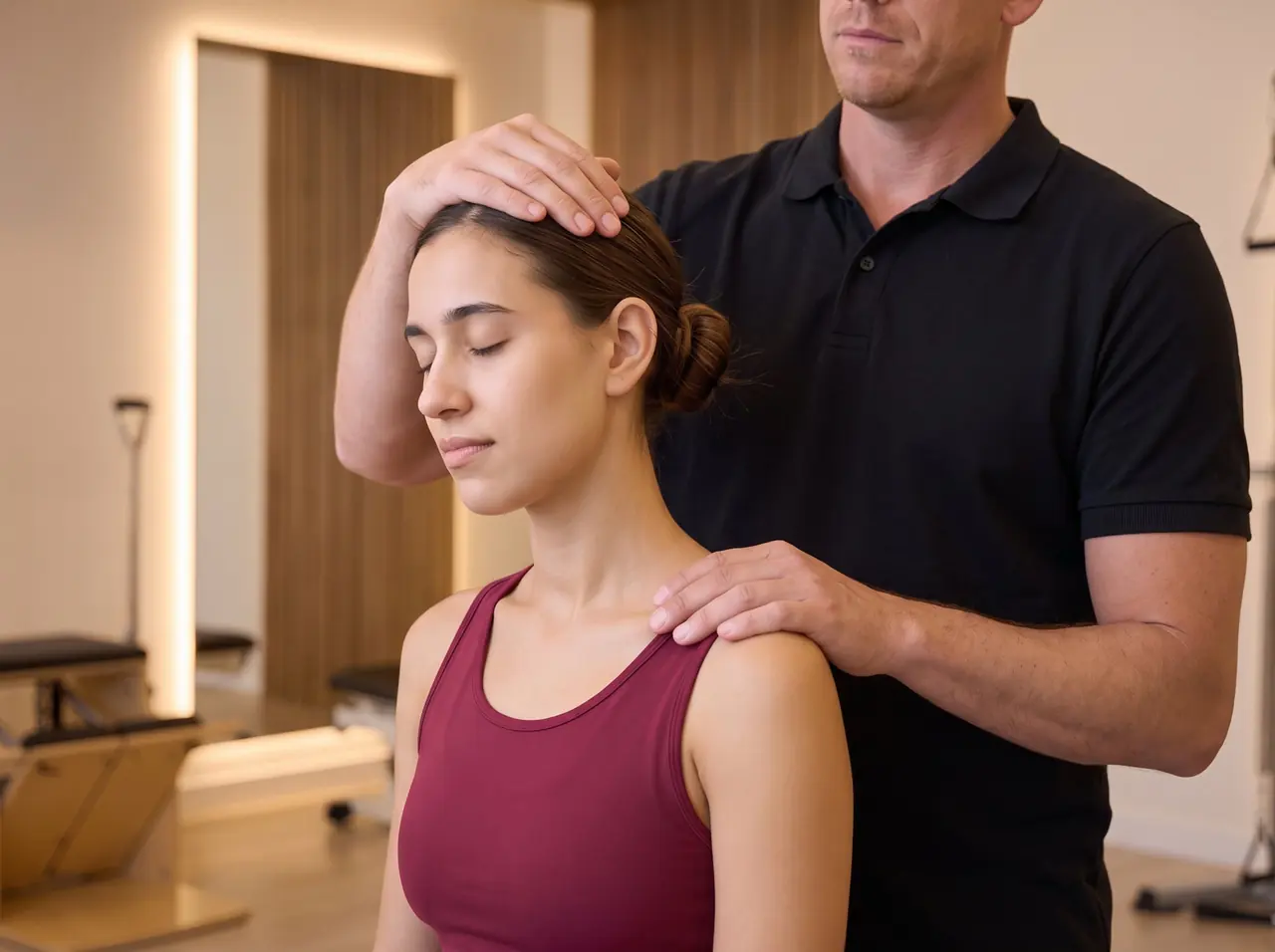
Post-concussion syndrome is the name for concussion symptoms that last longer than the usual recovery window. A concussion is a brain injury caused by a blow or jolt that moves the brain inside the skull. Most people feel better within a couple of weeks, but some do not.
A blow or sudden jolt shakes the brain inside the skull.
Balance, vision and energy systems stop working together smoothly.
Some of those systems keep struggling after the others recover.
The re-check
We re-test the same measures as you go. If a system is not improving, we change the plan or point you back to your physician.
Symptoms
Causes
A tackle, a header or a hit from a ball can cause a concussion. An athlete with a suspected head injury should leave play and be checked.
Stairs, wet floors and ladders cause many concussions, often with no visible bruise.
A crash can whip the head forward and back without the skull striking anything.
Job-site falls, cycling crashes and riding accidents can all cause a concussion.
Treatment
We treat post-concussion syndrome by testing which systems are still off, then training them directly. Care can combine vestibular and eye-movement work, GyroStim, neurofeedback guided by a qEEG brain map, and DynaVision cognitive training, paced to your symptoms and coordinated with your physician.
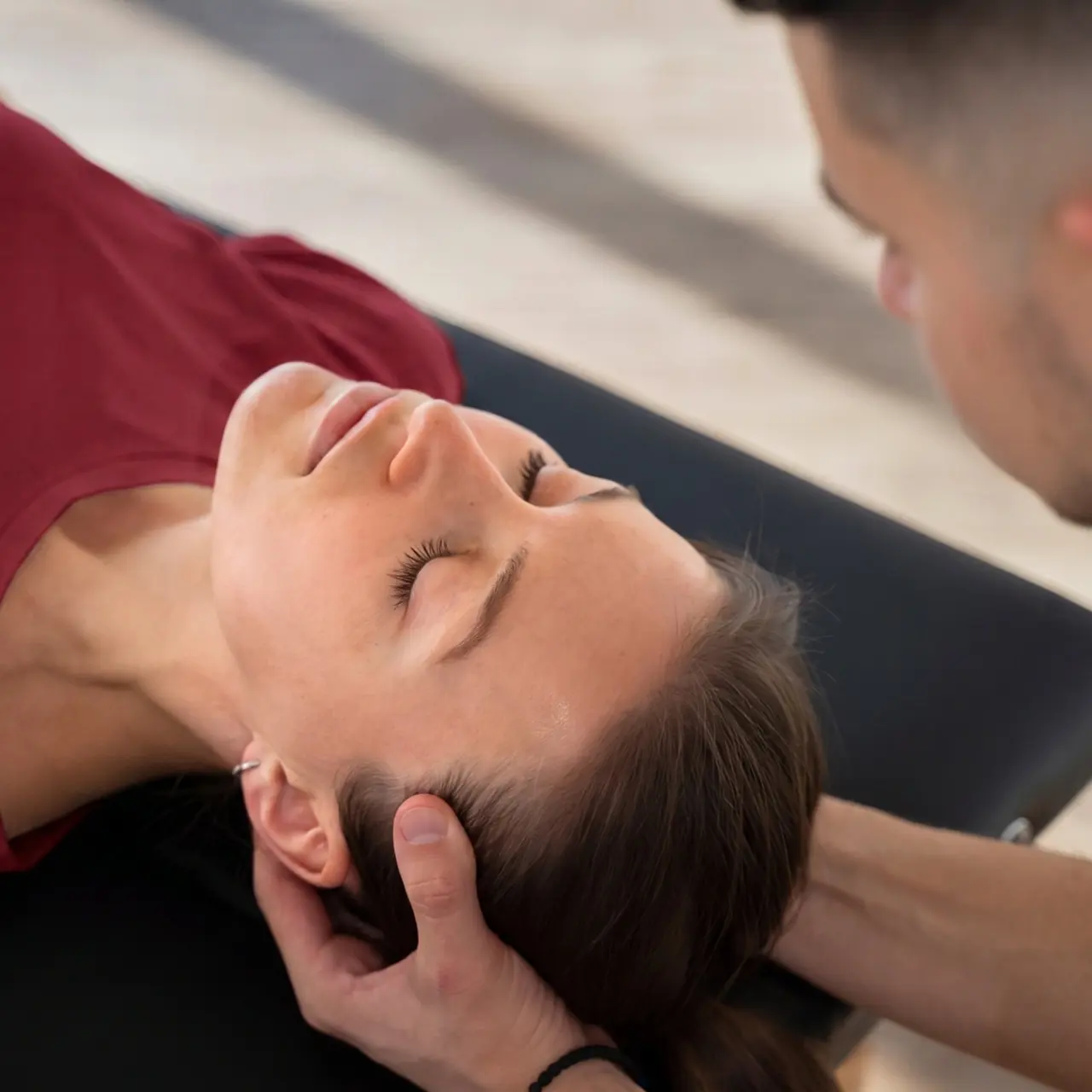
Concussion rehab brings the parts of your plan together: balance work, eye-movement exercises, thinking tasks and a gradual return to activity. See how a step-by-step concussion recovery plan is built from your exam.
Rancho Santa Fe only
When dizziness or motion sensitivity lingers, a computer-controlled chair adds measured rotation and target work. Learn how GyroStim balance training is paced to what you tolerate.
Neurofeedback uses live brainwave feedback to practice self-regulation. It may fit when focus, sleep or irritability are involved. Read about neurofeedback therapy for focus and sleep.
A qEEG records brain activity from scalp sensors, and the map helps set up neurofeedback. See what a qEEG brain map measures.
Rancho Santa Fe only
A light-board and screen tasks train visual scanning, reaction time and decision-making. Recorded scores show when to add challenge or scale back. Explore DynaVision reaction and focus training.
Testing: for student athletes, a pre-season baseline concussion test records an athlete's normal brain function before an injury, so later results have something to compare against.
[OWNER IRV-21: Which tests the baseline includes (not named on this page until the clinic confirms)]
Your options
| Option | What it involves | When it fits |
|---|---|---|
| Rest, then gradual activity | Short rest, then light activity such as walking | The first days after a concussion |
| Vestibular and vision therapy | Exercises for balance, eye movement and dizziness | Dizziness, neck pain or headaches beyond about 10 days |
| Medication for symptoms | Prescribed by your physician for pain, sleep or mood | When symptoms need medical management; we do not prescribe |
| Counseling support | Talk-based care with a licensed mental health professional | When anxiety or low mood is a big part of recovery |
| True Performance program | Testing plus balance, GyroStim, neurofeedback and DynaVision work | Symptoms that linger, or an athlete working back to sport |
These options often work together: your physician manages diagnosis and medication, and we handle rehabilitation.
Recovery
Recovery is different for everyone. Here is what published guidance says about the usual course, not a fixed True Performance schedule.
First 24 to 48 hours
Brief rest, then light activity such as walking. Guidance for young athletes favors early light activity and less screen time over strict rest.
Up to about 2 weeks
Most people with a concussion feel better within a couple of weeks.
Beyond about 10 days
For teens with ongoing dizziness, neck pain or headaches, the consensus guidance recommends rehabilitation aimed at the neck and balance system.
Beyond about a month
For young athletes still struggling after 30 days, active rehabilitation and coordinated care may reduce symptoms.
At least 7 days in California school sports
School comes first. Sport then returns one step at a time, each step usually at least 24 hours, with a licensed health care provider's approval.
Sources
Source: Amsterdam 2022 consensus recommendations for young athletes.
Source: CDC HEADS UP return-to-sports steps.
Red flags
Most concussion symptoms improve with time. Some need emergency care right away.
If you notice any of these after a head injury, call 911 or go to the emergency room before anything else.
Source: CDC's guide to concussion symptoms.
Parents and coaches
If your teen still has headaches, dizziness or trouble in class more than 10 days after a hit, it is time for a closer look. Lingering symptoms are common, and they usually point to a system that needs targeted work.
Our concussion program for teens and their parents checks balance, vision and thinking speed, and we coordinate with your child's physician and school.
In California, an athlete removed for a suspected concussion cannot return until a licensed health care provider gives written clearance. After a diagnosed concussion, state law also requires a graduated return-to-play protocol of at least seven days.
Dr. McWhorter puts it this way: "The better question is: 'Has their brain actually recovered enough to safely return?'"
★★★★★
Every equestrian rider or athlete needs this office part of their team. Especially if you have ever had a concussion or traumatic brain injury! They have significantly improved my overall brain performance for riding horses, playing golf, and running a business. Thank you Dr Jeff, Dr Matt, and Lex.

Expert care
Your care is planned by Dr. Jeff McWhorter, D.C., a Functional Neurology Expert and chiropractor who has had six significant head injuries himself. Concussion recovery is the core of his work.
He looks at how your balance, vision, thinking and nervous system work together, then builds a plan that respects your physician's instructions for school, work, driving and sport.
[OWNER IRV-16: 'six significant head injuries' (site says 'six severe head traumas'; video says 'six significant head traumas')][OWNER IRV-17: 'Concussion recovery is the core of his work' paraphrases the intro video ('my bread and butter'); transcript proofread pending]
Visit
Our office is at 18029 Calle Ambiente, Suite 507, in Cielo Village, Rancho Santa Fe, about two miles from Lake Hodges. Many patients drive in from across San Diego County, and some travel much farther; we help with planning a visit from out of town.
The first step
b63a765db8615 renders in this box (container min-height 560 px, iframe 620 to 640 px, per the Poptin playbook).
For most people, yes. Most feel better within a couple of weeks, and lingering symptoms often improve with targeted work.
Some symptoms appear right away, while others may not show up for hours or days.
Screens make your eyes and brain track fast, bright, changing images, which is hard work while vision processing recovers. Guidance for young athletes says less screen time helps.
A concussion is a mild traumatic brain injury, and post-concussion syndrome is what happens when its symptoms linger. More serious injuries follow a different path, described on our page about recovery after a traumatic brain injury.
Yes. A physician should check any suspected concussion and set limits for school, work, driving or sport. We plan rehabilitation around those instructions.
Yes. We work with student athletes and their parents, and we coordinate with the child's physician and school.
Start with a complimentary 15-minute call with our team.